

Reclaiming Space: The Politics of Dance in Pakistan’s Public and Private Sphere
By Aymen Hashmat and Samar Waqas Qureshi
To dance in Pakistan is to trace hope in the air, to carry stories in silence, and to resist with beauty. Classical or contemporary, dance in Pakistan is far more than an art form. In a society where women's visibility in the public sphere is limited or controlled, dance often becomes a political act. It is a way of exercising agency and claiming visibility. The histories of dancers like Sheema Kermani and Nighat Chaudhry tell us how dance has overcome structural barriers like religious fundamentalism and state censorship. And yet, this art form exists in Pakistan amidst contradictions created by class, gender, religion, and activism.
The contemporary Pakistan dance scene cannot be understood without considering the consequences of the Islamization policies of General Zia-ul-Haq in the late 1970s and 1980s. Dance schools were shut down, artists were exiled, and generations were denied formal dance training and opportunities. Lacking official spaces, artists like Sheema Kermani and Nighat Chaudhry were compelled to seek out foreign cultural institutions, like the Goethe Institute, American Centre, and German Institute. Private homes and basements of art councils were other significant spaces, though always precarious and operating in an unofficial manner: “Even laughing was seen as a crime for a woman; not wearing a dupatta was a ‘gunnah’ in the eyes of patriarchy ”1.
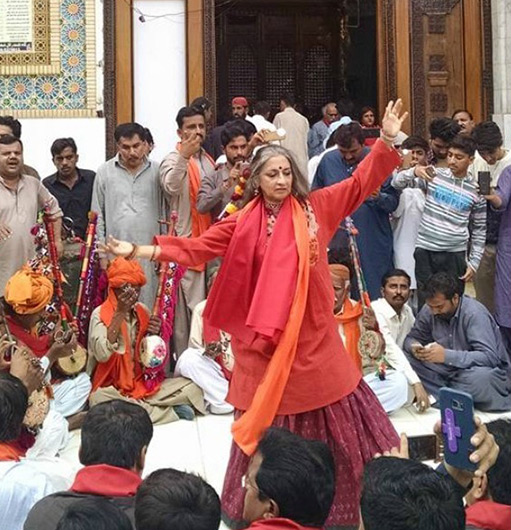
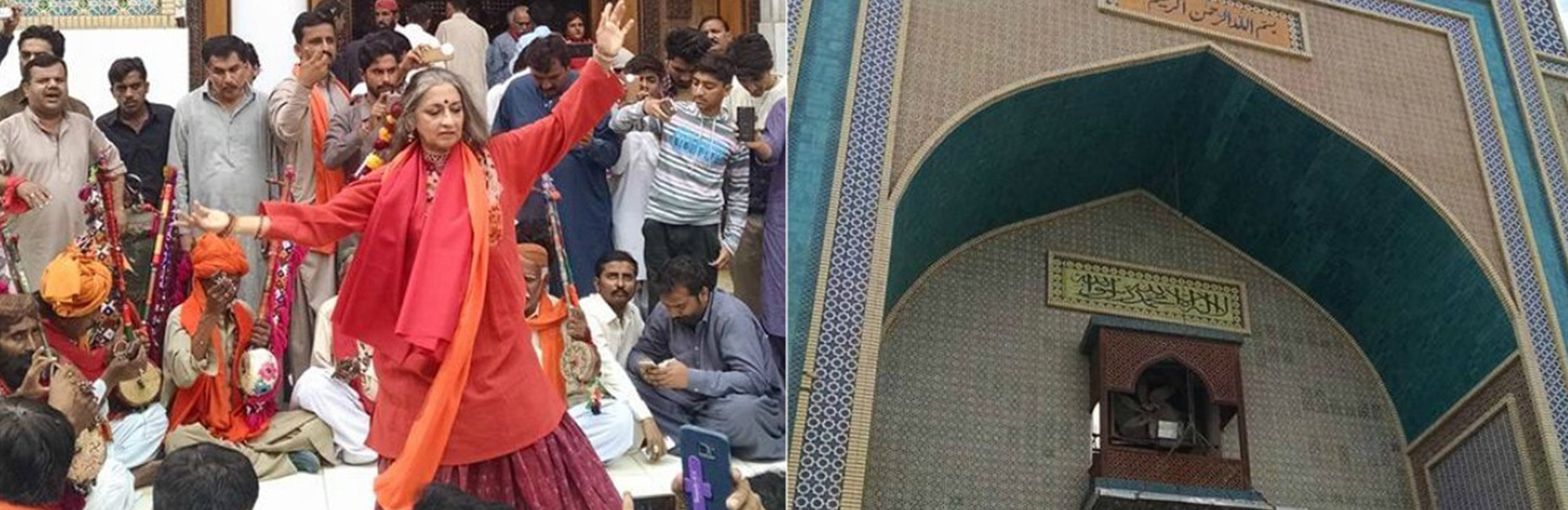
Kermani's life and work are reflective of how dance in Pakistan became linked with political and feminist activism. In Pakistan, she adapted these ideas to resistance through her movement, Tehrik-e-Niswan. There, she has used dance and performance not merely as art but as tools to confront violence against women and reclaim marginalized public spaces2. She has done this by staging performances in streets, shrines, and slums, spaces often deemed inappropriate or unsafe for women, using traditional forms like Bharatanatyam to challenge cultural taboos and assert women's presence in the public sphere. Kermani’s identity as both artist and activist highlights how dance transcends aesthetic performance to become a form of embodied political resistance, especially vital amid increasing religious fundamentalism and state repression3 . A striking example of this was her dhamaal at the shrine of Lal Shahbaz Qalandar in Sehwan after a deadly suicide attack, where she danced in defiance of extremism, affirming that “nobody can stop dance and music”4 and reclaiming the spiritual and cultural sanctity of the space through performance. Hence, dance serves as a potent form of feminist praxis in South Asia, challenging entrenched gender norms and state control.
Despite dance’s potential to democratize cultural expression, the reality on the ground reveals inequalities in who can participate in and benefit from dance activism. The Aurat March, Pakistan’s contemporary feminist rally, exemplifies this. While the event is free to attend and carries enormous symbolic weight, several interviewees emphasized its limited accessibility. One participant remarked, “The Aurat March may be open to everyone, but the costs of participation are social and economic: the safety risk and family disapproval means many working-class women cannot safely join”5 . This insight resonates with Syed’s critical study of urban feminist visuality, which challenges binaries of “liberated” versus “oppressed ”6 Muslim women and highlights how patriarchal power operates through spatial and classed restrictions.
Central to the Jalib Mela’s success was Sheema Kermani’s compelling performance which was a composite of Bharatanatyam, Kathak, and contemporary choreography, that narrated stories of women’s empowerment, resistance, and embodied dignity. Notably, the Mela drew a largely male audience from working- and lower-middle-class backgrounds, including former members of the Khaksar Tehreek, a quasi-militaristic socio-political movement known for its nationalist and religious ethos7. In Pakistan’s gendered public sphere, male participation often becomes a marker of social legitimacy, conferring an unspoken validation that is frequently denied to women-centered spaces. The venue, a cultural site known for leftist and literary gatherings, played a critical role in shaping this reception. Unlike the Aurat March, which takes place in contested streets and is policed and surveilled, the Jalib Mela occurred in a historically significant setting associated with poets and political dissidents.
This raises a crucial set of questions: when does dance become publicly acceptable and to whom? Is the audience’s reception shaped more by class dynamics, gendered respectability, or both? Even among those who valorize dance as a cultural form, its acceptability remains contingent: framed as artistic and respectable in elite academic spaces or cultural festivals yet stigmatized as vulgar or immoral when performed in streets, katchi abadis, or mass mobilizations. Thus, it is not dance per se that is rejected, but rather who dances, where they dance, and under what gaze.
However, the complexities of dance activism extend beyond audience composition and venue. The economic realities faced by performers often shape the scope and reach of their activism. Chaudhry shared a reflection:
“While teaching at Habib University allows me to preserve and transmit classical dance, my students largely come from privileged urban backgrounds. Many talented young people from less affluent areas have no access to these spaces. I try to perform in more accessible public venues, but I also must support my family. Financial constraints limit how much I can do beyond these elite circles” 8.
The rise of social media platforms has revolutionized dance culture in Pakistan, offering increased visibility and new modes of engagement. However, in today’s digital age, having a public account and a sizable following is often a prerequisite for visibility, legitimacy, and economic viability. This shift reflects the increasing commodification of dance, where artists must navigate social media driven by algorithms, virality, and marketability as much as by artistry.
However, this digital expansion carries contradictions in terms of preserving the integrity of the performing arts. While social media has popularized diverse dance forms and broadened audiences, the “Bollywood-ification” of dance frequently reduces complex classical into easier, stylized movements as inspired by the Bollywood industry and designed for quick consumption and viral appeal. Chaudhry remarks regarding this “Dance is a lot more acceptable now, but in different ways. I would say that Kathak is a lot more acceptable now because of social media ”9. This aesthetic simplification risks the integrity of the dance form as it strays away from its rich cultural heritage. It was also remarked that in an interview, “There is a very big difference in kathak influencers and classically trained kathak dancers, curated Instagram Bollywood aesthetic, does not depict the true art form”10
Spaces like those in Lahore's The Colony and Karachi's T2F reveal a contradiction in Pakistan's dance scene: in providing room for contemporary performance, they reinforce socio-economic segregation. Such spaces have come to be spaces of the elite, commercializing dance as an elite commodity rather than common cultural heritage by being only accessible to privileged individuals. Formally educating individuals in dance and engaging with communities continues to be limited to privileged individuals, restricting the art form's larger political and cultural role by prioritizing entertainment and profit-making over accessibility.
Despite the challenges faced by dancers in Pakistan, dance continues to hold profound communal and spiritual significance. Ritual forms of dance like the Dhamaal danced during the Urs of Lal Shahbaz Qalandar offer a space of healing and expression of the body. The rituals transcend mainstream religious and cultural confines, providing alternative spaces of belonging and resistance. Chaudhry describes dance as sacred and redemptive, grounded in spiritual affinity. Having been introduced to the practice of Dhamal by her Sufi master, she describes how this practice influences her artistry, giving it healing power that resonates with audiences: “When I dance, people say they feel healed, their stress and pain ease. It’s not just performance: it’s a sharing of divine energy”11.
Dance in Pakistan remains precariously positioned due to deep institutional neglect, a reality starkly contrasted by the more robust support systems in neighboring India. Chaudhry highlights this disparity, noting how in India, subsidized government programs make classical dance education accessible even to lower-income students, with fees as low as 50 rupees per month. In Pakistan, however, the lack of government support means that arts institutions charge higher fees and dancers must rely heavily on elite patronage to survive: “The elite actually become our bread and butter. We can afford to pay 20,000, 15,000, 10,000 so that we can run our home and carry on with our art ”. Farah Yasmeen Sheikh talks about this comparison from her cross-cultural experience, observing that in India, the arts are deeply embedded in social and cultural life, while Pakistan continues to struggle with limited opportunities, funding, and public engagement. She notes, “There’s no shortage of potential, creativity, and talent in Pakistan, but what’s severely lacking is opportunity and compensation .” Both artists emphasize that without systematic investment and affordable access, dance remains an elite pursuit in Pakistan, reinforcing social divides and limiting its emancipatory potential.
Despite these challenges, Pakistan is not without promising initiatives that nurture dance and cultural expression. Institutions like the Alhamra Arts Council and cultural festivals such as the WOW Festival held in early February demonstrate a growing infrastructure supporting performing arts. At WOW, Baebaak, a powerful dance piece by Suhaee Abro, Wajeeha Wasti, and Momina Khan, explored women’s strength, resilience, and transformation through movement. Sheikh herself has been featured at events like the Lahore Literature Festival, highlighting the increasing, yet still limited, platforms for classical and contemporary dance in Pakistan.
To fully realize dance’s emancipatory potential, Pakistan must aim to dismantle the social and political barriers that confine its practitioners. This includes challenging patriarchal norms, expanding access to performing arts education, and resisting the commodification that limits dance specifically for elites. Only by fostering dance as a collective and inclusive practice in Pakistan can cultivate an arts culture that genuinely represents and serves the diverse voices of its people.
Bio of Researchers
Aymen Hashmat and Samar Waqas Qureshi are rising seniors at LUMS, majoring in Sociology and Anthropology. Their academic interests lie at the intersection of gender, policy, and digital media.
- Interview with Nighat Chaudhry, Zoom, April 18, 2025.
- Basu, Priyanka, and Sheema Kermani. “Dance, Gender, and Activism in Pakistan: Interview with Performer-Activist Sheema Kermani.” Feminist Encounters, vol. 7, no. 1, 2023.
- Pande, Rekha. “The Politics of Dance in Pakistan.” International Feminist Journal of Politics, vol. 6, no. 3, 2004, pp. 508–514.
- Z. Ali. “Nobody Can Stop Dance and Music: Sheema Kermani.” The Express Tribune, 21 Feb. 2017.
- Anonymous dancer, interview, Lahore, January 27, 2025.
- Syed, Kanwal. ہم گنہاگار عورتیں (We Sinful Women): Urban Feminist Visuality in Contemporary Art and Feminist Movements in Pakistan After 9/11. PhD Dissertation, Concordia University, 2022.
- Yousaf, N. Chronology of the Khaksar Tehrik and its Founder, Allama Mashriqi.
- Ibid.
- Ibid.
- Ibid.
- Ibid.