


Genetic Engineering and Reproductive Genomics: Ethical and Religious Perspectives under Shari’ah Law

Ali Abbas Gilani & Mahnoor Sakina Naqvi
Given the rise in infertility and the growing promise of genetic technologies like Clustered Regularly Interspaced Short Palindromic Repeats (CRISPR), it becomes pertinent to explore whether such scientific interventions can be harmonized with the ethical and legal boundaries set by Islamic Shari’ah law. This article examines this intersection, arguing that gene editing may be religiously permissible and socially necessary under certain conditions.
As per a research study conducted in 2020, infertility affects a significant portion of the population in Pakistan, with current estimates indicating a prevalence of approximately twenty-two percent (22%), four percent (4%) of which is primary (never conceived), and eighteen percent (18%) secondary infertility (couples that have previously conceived, but are unable to do so now). Social, emotional, and cultural pressures further exacerbate the challenges faced by affected individuals, particularly women 1. This condition is often stigmatized, leaving women to bear the burden of societal expectations. The claim is grounded in the same research, where one-third of the participants, despite the majority belonging to the educated class, still believed that women primarily cause infertility 2. Social stigmatization intensifies significantly in economically disadvantaged areas, leaving women highly vulnerable and susceptible to psychological disorders (e.g., anxiety and depression) that often go undiagnosed and untreated due to limited education and awareness.
Thirty-five percent (35%) of the infertility cases are a direct result of female factors, encompassing a diverse range of causes, from disruptions in ovarian development to oocyte maturation and fertilization capability, as well as challenges in preimplantation development, implantation, and fetal growth 3. Certain genetic irregularities can contribute to reproductive challenges in women. These include significant chromosomal abnormalities, tiny deletions or duplications in chromosomes that are not easily detected, and variations in specific genes 4. These genetic differences can affect crucial biological functions, such as the formation of eggs, the maintenance of ovarian health, hormonal balance, and the proper development and functioning of reproductive organs 5.
The rapid advancements in genetic engineering, particularly through Clustered Regularly Interspaced Short Palindromic Repeats (CRISPR) technology by editing DNA sequences, have opened new avenues for treating genetic disorders, improving health and tackling biological challenges, including infertility. Gene editing is a rapidly advancing field in molecular biology that enables precise alterations to the DNA sequence within an organism’s genome. Among the most groundbreaking tools in this domain is CRISPR-Cas9 (Clustered Regularly Interspaced Short Palindromic Repeats and CRISPR-associated protein 9), a system adapted from the bacterial immune response. CRISPR works by using a short RNA sequence (guide RNA) that directs the Cas9 enzyme to a specific location in the genome, where Cas9 makes a precise cut in the DNA.
- Hamza M Ahmed and others, 'Awareness Regarding Causes of Infertility Among Out-patients at a Tertiary Care Hospital in Karachi, Pakistan' (2020) 12(4) Cureus <https://pmc.ncbi.nlm.nih.gov/articles/PMC7233490/pdf/cureus-0012-000000…; accessed 2 May 2025.
- Ibid.
- Svetlana A Yatsenko and Aleksandar Rajkovic, 'Genetics of human female infertility' (2019) 101(3) Biology of Reproduction https://academic.oup.com/biolreprod/article/101/3/549/5488425 accessed 2 May 2025.
- Inna I Mordovina and others, 'Genetic factors of reproductive disordersin female' (2024) 8(3) Reproductive and Developmental Medicine https://mednexus.org/doi/epdf/10.1097/RD9.0000000000000095 accessed 15 May 2025.
- Ibid.
The cell’s natural repair mechanisms then attempt to fix this break, allowing scientists to either disable faulty genes or introduce corrected sequences (Figure 1 6).
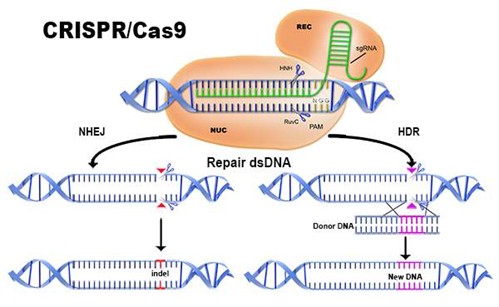
Figure 1: Mechanism of CRISPR Cas9 for Gene Editing
CRISPR/Cas9 gene editing has emerged as a powerful tool in addressing infertility and reproductive disorders by enabling precise modifications at the genomic level. Its integration with assisted reproductive technologies (ARTs) such as in vitro fertilization (IVF) has shown promise in enhancing fertility outcomes. Furthermore, CRISPR offers therapeutic possibilities for gynecological conditions such as endometriosis, uterine fibroids, and complications in embryo implantation by targeting relevant genetic pathways. Research also points to its applicability in addressing premature ovarian insufficiency by modulating genes like the follicle-stimulating hormone receptor and apoptosis-related pathways7. These advancements highlight CRISPR’s potential to not only treat inherited causes of infertility but also to improve the efficacy and safety of ARTs, paving the way for future clinical applications in reproductive medicine.
However, these scientific innovations also raise profound ethical and religious questions, particularly in Muslim-majority countries where Shari’ah law plays a significant role in guiding ethical decision-making.
Islamic teachings emphasize a deep respect for the natural order, and the traditional stance on modifying nature aligns with this principle. The Quran, in the following words, reinforces the belief that God’s creation is inherently divine, created in the best possible form and should not be altered without careful consideration8:
“Surely, We created man in the best of molds” (Quran 95:4)
From a Shari’ah perspective, the permissibility of such interventions is debated, with considerations of the sanctity of creation, the principle of “no harm,” and the broader objectives of the Shari’ah (maqasid al-Shari’ah) which underline the fundamental elements of human existence (al-darūrāt al-khamsa) that includes anything that preserves religion (dīn), life (nafs), intellect (ʿaql), progeny (nasl), and property (māl)9. All the jurists that favor genetic engineering interpret the goals, purposes, and necessity of CRISPR in a manner that promotes these objectives.
- Yan Chen and others, ‘Genome editing using CRISPR/Cas9 to treat hereditary hematological disorders' (2022) 29(5) Gene Ther https://doi.org/10.1038/s41434-021-00247-9 accessed 6 May 2025.
- Shiza Hanif and others, 'Advancing CRISPR technologies in reproductive biology' (2024) 3(1) Gene & Protein in Disease https://doi.org/10.36922/gpd.2701 accessed 7 May 2025.
- The Noble Quran, Surah at-Tin (95:4) https://quran.com/95/4 accessed 15 May 2025
In cases of infertility, Shari’ah law would generally permit medical interventions, as one of the goals of Shari’ah is to protect and promote progeny, but manipulating genetic material raises concerns about interfering with divine will, potential long-term effects, and the moral boundaries of human intervention in natural processes. Three of the key Muslim transnational institutions, the International Islamic Fiqh Academy10, the Islamic Organization for Medical Sciences 11, and the Islamic Fiqh Academy12 took the stance that human intervention should be restricted in treating diseases and shall only be utilized if it has high possibility to treat or reduce disease and where there is no alternative remedy available. The process at times is deemed to violate human dignity and is considered illegal unless safety and efficacy issues are resolved. Therefore, the principle of ‘preventing harm takes precedence over securing benefit’ is of utmost importance to those who reject genetic engineering. Furthermore, in line with the principle of preservation of life and lineage, preventing the transmission of a fatal disease to the offspring is considered to be consistent with the Islamic teachings13. However, we contend that infertility treatment, like vaccines do modify the human body but should be rendered permissible under the principle of maslaha (public interest). Without medical intervention, conception would be unattainable, which makes the necessity (darurah) far greater than any potential harm (darar) associated with the treatment.
Contextualizing the Future Scope of CRISPR in Pakistan
A nation founded on Islamic principles, Pakistan’s identity as the Islamic Republic is evident not only in its name but also in its daily affairs. In a recent judgment by the Federal Shariat Court (FSC) titled Farooq Siddiqui v. Mst. Farzana Naheed 14, gestational surrogacy was declared against the Injunctions of Islam and hence was declared illegal. There are diverse viewpoints on the permissibility of surrogacy in Muslim countries worldwide, with some embracing it while others impose a partial or complete ban. Given that the FSC declared gestational surrogacy inconsistent with Islamic injunctions, signaling a conservative approach to reproductive technologies. This precedent suggests that CRISPR-based interventions in treating genetic diseases, including infertility in women, may also be scrutinized and could eventually face legal restrictions or outright prohibition in Pakistan. However, the same case could also serve as a precedent to support the legalization and promotion of infertility treatment using CRISPR. The Court permits IVF and test tube babies if genetic parents are involved at all the stages during the procedure and there is no third-party intervention. Since the child born through this process is legally recognized and considered legitimate – without any concerns of genetic mixing or third-party involvement – the same reasoning could be applied to CRISPR. As this technology does not introduce foreign genetic material but rather corrects an individual's own genes, it should likewise be permitted.
Comparative Study on Iran
Iran is one of the first Muslim countries to legalize genetic engineering and develop a “National Ethical Guidelines of Biomedical Research” which consist of “Ethical Guidelines for Clinical Trials, Ethical Guidelines for Research on Minors, Ethical Guidelines for Genetic Research, Ethical Guidelines for Gamete and Embryo Research, Ethical Guidelines for Transplantation Research, and Ethical Guidelines for Research on Animals.” In line with the Islamic principles, eugenic researches are disallowed but “in any kind of genetic researches, the best interests of the person concerned [is to] be taken into consideration.”
A Way Forward
It is essential to draw a balance between the ethical challenges raised in multiple Fatwas and the need for CRISPR in treating infertility in any Muslim country, including Pakistan. Thus, taking into account the objectives of the Shari’ah law along with the certain exceptions laid down by the Islamic jurists which allow the usage of genetic engineering, when done to promote maslahah (public interest), is a darurah (necessity) of the time where there is no other alternative, and finally the said procedure is done in a controlled manner with minimum harm (darar) and considerable benefit is arising out of it. Moreover, there must be a requirement of informed consent, under which the patient is aware of the cons of the treatment. In addition, ethical guidelines need to be established to increase certainty (yaqin) and relevant legislation need to be in place to make the process Shari’ah compliant. This approach not only offers a solution for genomic illnesses but also helps women circumvent societal stigma and backlash, which often accompany or arise from difficulties in conceiving a child.
Ali Abbas Gilani is a BA. LL.B. (Honours) Student at Shaikh Ahmad Hassan School of Law (SAHSOL), Lahore University of Management Sciences (LUMS).
Mahnoor Sakina Naqvi is a BS Biology Student at Syed Babar Ali School of Science & Engineering (SBASSE), Lahore University of Management Sciences (LUMS).
- Felicitas Opwis, Maṣlaḥa and the Purpose of the Law (Brill 2010) 67.
- ‘Heredity, Genetic Engineering and Human Genome - Resolution No. 203 (9/21)’ (International Islamic Fiqh Academy) <https://iifa-aifi.org/en/33075.html> accessed 15 May 2025.
- 'Is It Permissible to Study Genetic Engineering in Islam?' (Islam QnA - IOMC) <https://m.islamqa.info/en/answers/103335/is-it-permissible-to-study-genetic-engineering-in-islam?traffic_source=main_islamqa#prohibited-applications-of-genetic-engineering> accessed 15 May 2025.
- 'Gene Therapy: Islamic Rules and Regulations' (IFA) <https://fiqh.islamonline.net/en/gene-therapy-islamic-rules-and-regulations/> accessed 15 May 2025.
- Noor M Isa and others, ' Islamic Perspectives on CRISPR/Cas9‑Mediated Human Germline Gene Editing: A Preliminary Discussion' (2020) 26 Sci Eng Ethics 309-323 <https://doi.org/10.1007/s11948-019-00098-z> accessed 7 May 2025.
- PLD 2017 FSC 78.