


Mashallah, Our Moorat: Queer Aesthetics, Camp Refusal, and Artistic Survival in Lahore
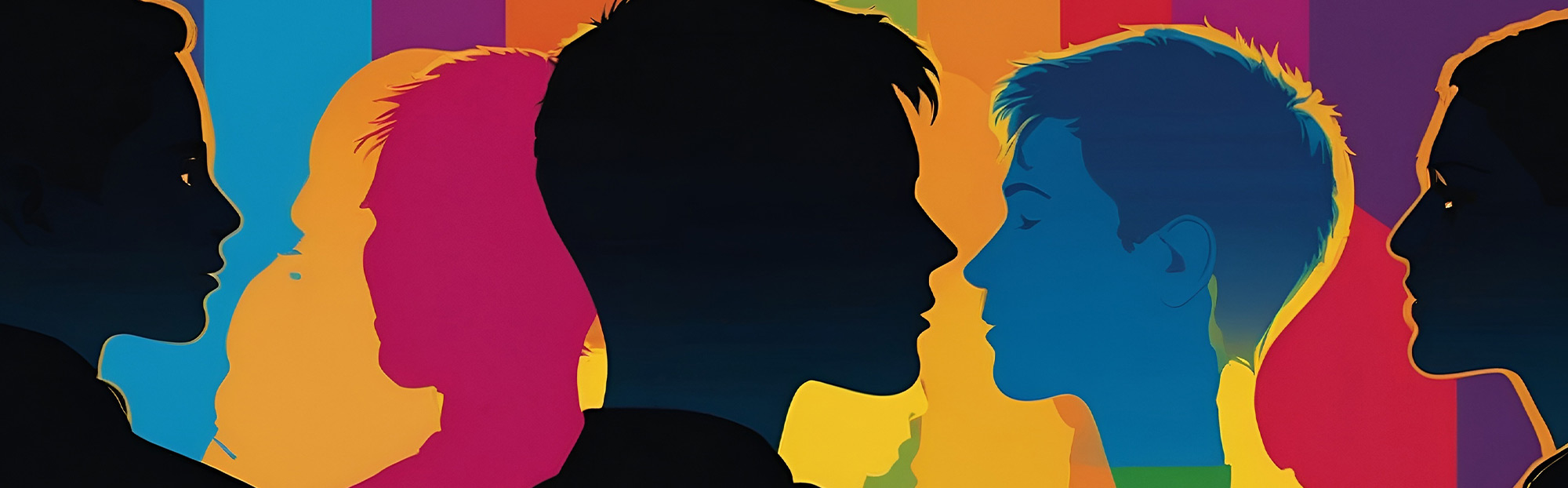
In Lahore, queer and transgender artistic practices are often approached as if they only reflect identity. The research presented in this project, as we will see, presents a far different picture. Art manufactures an infrastructure of survival and world-making, taking root from childhood experiments to methods of bricolage that substitute for formal access, collectives and raves to zines, posters and tattoos, and finally digital circulation that connect and hold the fragile queer public in conjunction with itself. Across our interviews, Zai, Bash, Pakeezah, and Chahat approach art as a process through which the self gives birth to its own material reality. It is precisely why we argue that queer aesthetics, not just in Lahore but anywhere, come about through impeding infrastructures of making, where improvisation, refusal, and stratified access to visibility transforms material scarcity into a generative aesthetic system 1 2 3 4.
Sara Ahmed’s Queer Phenomenology discusses how bodies are shaped by orientation, by what they move towards, away, from, and into line with. Her language of being “out of line” and “wonky” reasons why Lahore feels different to the bodies that are seen as ‘femme’, ‘trans’, ‘khusra’, respectable, or out of place5. This logic is clear when Zai describes Lahore as the place that “taught me not to hide”, or when Bash narrates how shifts and perception variate when the embodiment is fiercely and unconventionally feminine. José Esteban Muñoz builds the clarity with how these artists do not reject the culture they have inherited, but they work “on and against it” using majoritarian material to “make up a new world”6. Bash’s makeup built upon the khawajasira camp in mujra performances, and Pakeezah’s use of Bollywood item numbers and mujra soundscapes are more? disidentificatory transformations than mimicry – a false read. Intersectionality makes visible how class, education, diaspora access, and social capital categorize as to who can enter queer spaces and cannot, producing regimes of differential visibility than union.
Mujhse Meri Raat Na Cheeno nikalne dou mujha y in andheri Sarko par mat roko mujhay phir din na charh aye mujhsey meri raat na cheeno mat took kyun ke azaadi raat ki hi hai na jaany din aur meri kya larai hai? iss liye mujhse meri raat na cheeno
The earliest archive and inlet to queerness is childhood. Zai remembers stealing her mother’s churiyan and dupattas at seven or eight and dressing up until euphoria would emerge out of it; Bash recalls putting makeup on their younger sister because their own self was not a legible and permissible canvas. Under thick description, these are not mere childhood games and play, but public signs of an embodied orientation that is figuring its language to commune.
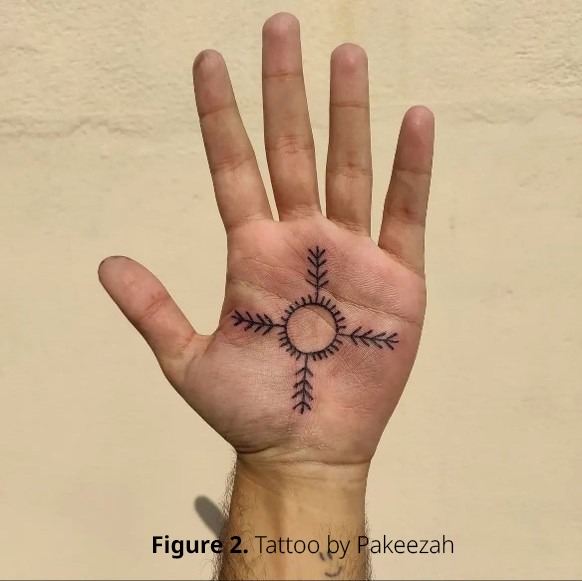
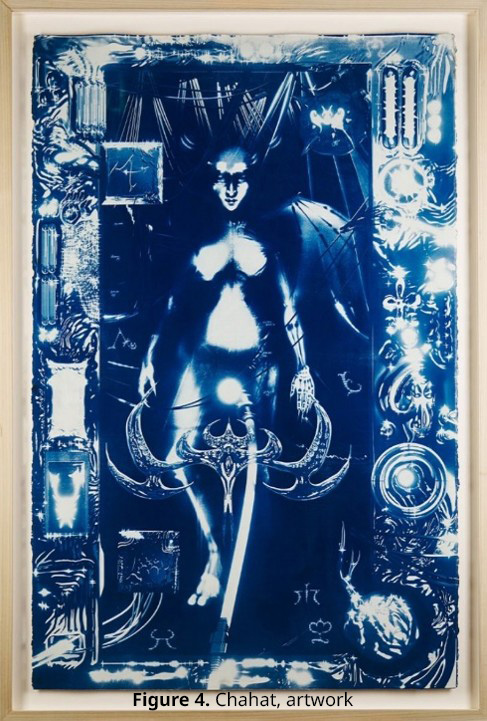
Constraint becomes form for each of these artists. Pakeezah’s first tattoo comes from a sewing needle, ink, and a YouTube tutorial, because professional equipment was costly and inaccessible. Bodily authorship takes birth here more than skill learning. Tattooing becomes a tool for gender and queer affirmation, and a way of making the body one’s own sketchbook. Bash’s makeup practices feature the same logic. It may start with experimentation on a sibling but moves into freelance makeup art on others. It not only becomes income but also becomes a method to find community and style. Chahat stages trans embodiment as transformation, loss, and avatar-making with her labor-intensive material processes of charcoal animation, painted frames, cyanotype prints, CGI and Blender featuring mutilated bodies and Kali – the Hindu goddess. This lack of access, their scarcity, represents their refusal of structural hegemonic artistic legitimacy and translates into method and style.
Visibility in Lahore is classed. Bash talks of how class is “definitely part of the scene”, and Pakeezah mentions that her access to queer circles came through Zunaira Mashood 7, “the elite khusri of Lahore”, furthering their point that “a poorer khawajasira girl” would not have had the same “in”. The queer community is divided across margins of class and social capital with structural inequality shaping their experiences, where some bodies come, with polished linguistics, institutional privilege, or diasporic capital, and other enter through fragile, informal routes. Collectives like ZK8 operate as relational infrastructures that let artists collaborate, circulate their work, and access audiences. Visibility is always uneven and is a regime of access rather than a monolithic condition.
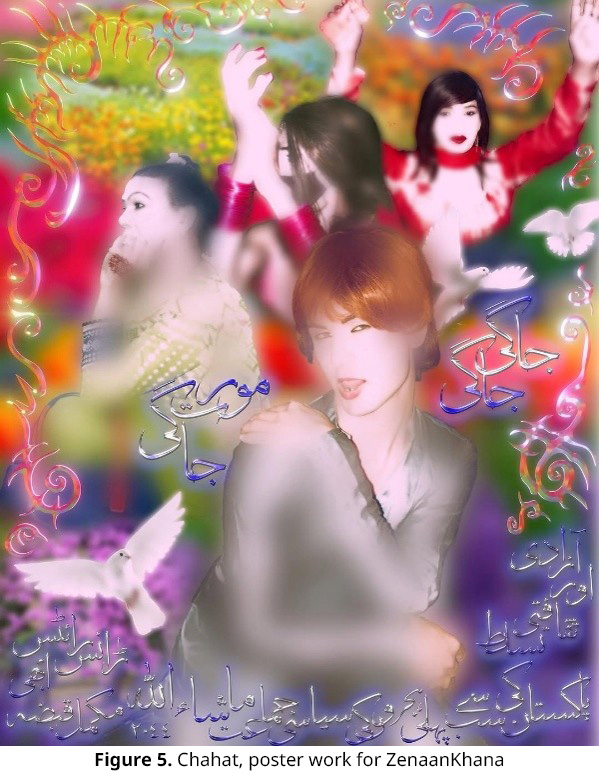
These practices, as mentioned earlier, are held together by a collective infrastructure. ZK appears to be Bash’s first real creative freedom and as a place where collaboration diffuses from friendship into work, art, and visibility. Chahat’s Loha zine situates the fragility of the infrastructure around art: printers and publishers refuse sexually explicit content, prices rise if they do accept, and the circulation of the material is easier offshore than at home. Lahore’s queer world of art is sustained by this kind of maintenance labor: making posters, holding events, sharing files, persuading printers, and holding space for other people’s work. Queer art is a form of infrastructural care rather than merely a means of expression.
Art instead of being a finished object is an area of inquiry in our research. Lahore’s queer art scene is composed of maintenance and invention. A single mug, set, or zine is never just its material form, but a result of networks of care, affect, access, and labour that remains socially uneven – which is why class cannot be an afterthought, as it decides which bodies are respectable, experimental, and which are to improvise without recognition. Class is the reason why visibility of queer art is so ambivalent. To be seen is to risk censorship and gross objectification, but being unseen furthers the denial of the circulation of self. The artists in this study live under this tension, and while they promise no fix to the structures, they make these structures livable.
This research contributes to ongoing conversations on queer South Asian art, transgender visibility, and ethnographic method. It suggests that queer art cannot be understood solely through representation, as the aesthetic practices examined here also organize forms of survival, relation, and collective endurance. The interviews further show how visibility in Lahore remains unevenly distributed through class, social capital, and institutional access, shaping who is able to circulate, create, and be recognized. At the same time, the accounts gathered here resist any singular account of queer culture in the city. What emerges instead is a thick and relational portrait of Lahore as it is lived through distinct trajectories, attachments, and forms of artistic practice. Read through these lives, the city appears less as a stable backdrop and more as a shifting field of constraints and possibilities through which queer worlds are continually fashioned.
Brood and Hassan Khalid are junior year anthropology students at LUMS with a strong interest in the thresholds of gender and sexuality and nodes of marginalization and survivability of the minority subjects in Pakistan.
- Zai is a transwomyn that engages in poetry.
- Bash identifies as nonbinary person and is a makeup artist and a DJ in making.
- Pakeezah identifies as nonbinary person and is a tattooist and a DJ.
- Chahat is a transwomyn with versatile interest in design, painting, tattooing, and DJ-ing.
- Ahmed, p. 66
- Muñoz, pp. 11, 196
- Name changed for anonymity.
- ZenaanKhana – a Lahori moorat-futurist collaborative collective.