


From Field to Floor: Agrarian Dispossession, Invisible Labour, and the Erosion of Identity Among Rural Migrant Women in Urban Pakistan
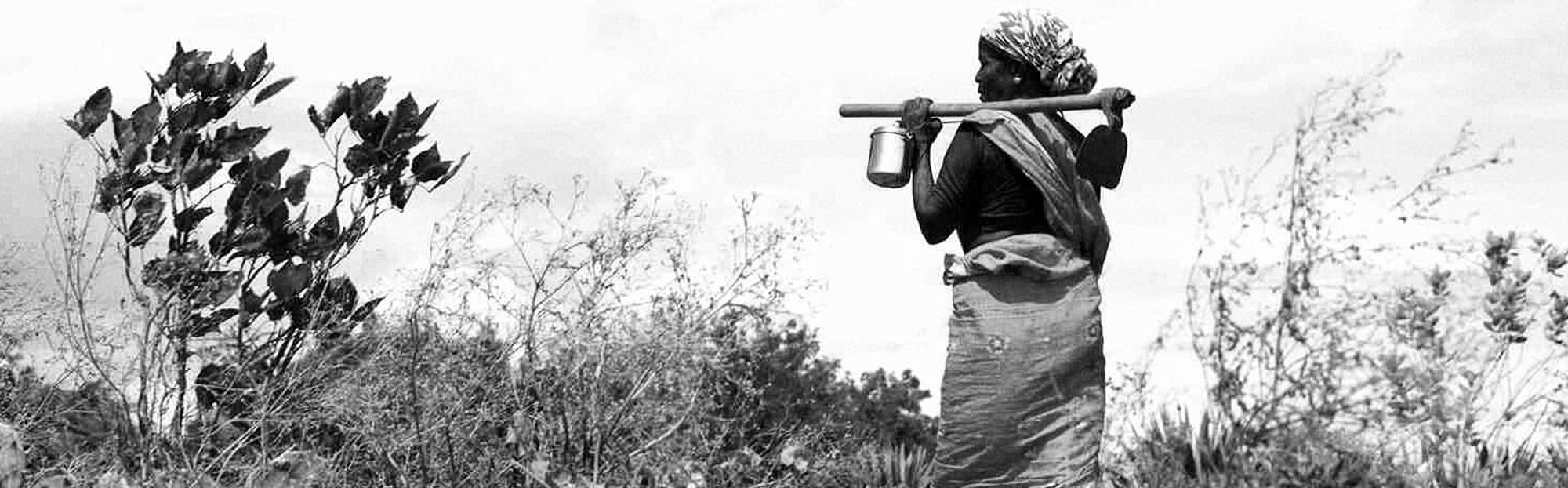
Shamshad from Kasur recalled working in the fields, sowing seeds, harvesting vegetables, with joy and a deep sense of community. That connection was irrevocably severed when she migrated to the city for survival. Approximately 70% of rural women employed in urban areas work as domestic workers, with no job security and no legal protection1. Pakistan's Constitution provides a fundamental rights framework: Article 9 guarantees the right to life with dignity, and Article 38 mandates social and economic rights. Yet these provisions operate within a liberal rights paradigm, one that extends full protection only to formally recognised, economically independent individuals 2, leaving the labour of female domestic workers legally invisible and unregulated. The neoliberal transformation of Pakistan's agrarian economy has disproportionately displaced rural women into urban informal domestic work. This makes their labour invisible, unprotected, and unvalued, which erodes their indigenous knowledge, land-based identity, sense of community belonging, and personal agency.
The Green Revolution and corporate farming did not merely transform agriculture; they specifically dispossessed women by converting communal, subsistence-based cultivation into a cash-wage economy controlled by corporate landlords and male landowners 3. In interviews, Zaitoon from Okara described how her relatives destroyed entire tomato crops when state price controls made harvesting economically unviable - a loss that wiped out a season's labour without compensation 4. Sadia from Faisalabad recalled women daily-wage workers in potato fields receiving exploitative wages below any subsistence threshold. This is precisely what Vandana Shiva theorises 5 as maldevelopment - a development model that systematically destroys women's productive capacity by excluding them from the formal economy. Shiva further demonstrates that the domination of women and the domination of nature are structurally linked 6.
The collapse of rural economic foundations rendered migration not a choice but an act of bare survival. Pushed out of agriculture and absorbed into domestic service, these women entered a labour category which is legally invisible. Many work multiple jobs, absorb domestic violence, and live in cramped urban spaces far from their communities. Maria Mies argued that the invisibilisation of women's labour is not an oversight of capitalism but a structural requirement: unpaid and undervalued female labour subsidises the entire system of accumulation 7. Ariel Salleh extends this analysis through the concept of meta-industrial labour - the work that undergirds all formal economic activity yet receives neither wages nor recognition 8.
The violence of migration was not only economic but epistemic and existential. It destroyed systems of knowledge, belonging, and selfhood that women had built in relationship with their land and communities. Women aged 50–65, when asked about village life, spoke with a vitality that stood in sharp contrast to the exhaustion with which they described their urban present. Zaitoon from Deepalpur recalled the harvest of wheat, rice, maize, sesame, and cotton -capturing not merely agricultural labour but an intimate, seasonal knowledge of land. This is the embodied, place-based knowledge that Val Plumwood identified as systematically devalued and erased by patriarchal capitalism 9. Beyond knowledge, what was lost was community itself. As one participant described, "Har koi aik dosre ka ahsas karta tha aur hum kheton mai mil kar kaam karte thay" (everyone felt for one another and worked together in the fields). In the city, that web of mutual recognition has been replaced by isolation, anonymity, and the transactional relationship of employer and servant.
Dispossession, invisible labour, and severed connection to land have produced not only material poverty but a profound psychological crisis. Older domestic workers carry their land-based identities as an internal resource even as those identities are rendered worthless by the urban economy. Younger women, aged 20–35, speak of the village with distant, almost foreign memory, disconnected not only from the land but from the cultural meanings it once held. One particularly striking case is a university-educated woman from Mahwala village in Okara who remains employed as a domestic worker because the structural conditions for upward mobility are simply unavailable to her. Her education, which should represent agency, has instead become evidence of the gap between formal promise and lived reality. Val Plumwood's concept of the "colonised identity" is instructive: when exploitation is sustained long enough, the oppressed begin to internalise their own devaluation, normalising suffering as inevitable rather than recognising it as structurally produced 10.
These women endure humiliation, harassment, and exploitation without legal protection or social recognition, yet within this suffering they retain a determined sense of purpose: the belief that their labour builds a better future for their children. This requires profound courage and demands urgent recognition from policymakers, scholars, and society alike. The aggressive commercialisation of land and the commodification of agriculture are not isolated economic decisions. They are violations of a deeper relationship between people — particularly women — and the natural world they once inhabited. In ecofeminist thought, nature is not a resource to be measured and traded but a living system to be respected and preserved. When land is treated as a commodity, it is not only the soil that is depleted but also the women whose knowledge, identity, and humanity were inseparable from it.
Sadia Haseeb is a law student with research interest in anthropology, human rights, and international law.
- Pakistan Bureau of Statistics, Labour Force Survey 2020–21 (PBS 2022) 47; see also Human Rights Watch, Swept Under the Rug: Abuses Against Domestic Workers Around the World (HRW 2006) 12.
- Under a liberal rights framework — rooted in the tradition of Locke and Mill — rights attach to autonomous, propertied individuals. Women in informal domestic labour, lacking formal contracts, legal personhood in the workplace, and economic independence, effectively fall outside its protective scope. See generally John Rawls, A Theory of Justice (Harvard University Press 1971).
- Vandana Shiva, Staying Alive: Women, Ecology and Development (Zed Books 1988) 72–75; see also Maria Mies, Patriarchy and Accumulation on a World Scale: Women in the International Division of Labour (Zed Books 1986) 54.
- The state-administered price collapse of 2019–2020 rendered tomato cultivation economically unviable for smallholders across Punjab, resulting in widespread crop destruction. See Government of Pakistan, Ministry of National Food Security and Research, Agricultural Policy Statement (2020) 18.
- Vandana Shiva, Staying Alive: Women, Ecology and Development (Zed Books 1988) 4–5. Shiva defines maldevelopment as the dominant Western model of development that displaces women and nature from the productive sphere, redefining them as passive and unproductive.
- ibid 20–22. Shiva draws on her concept of the feminine principle to argue that women's productive and reproductive engagement with nature is erased when land is enclosed and commodified under capitalist agriculture.
- Maria Mies, Patriarchy and Accumulation on a World Scale (n 3) 110–116.
- Ariel Salleh, Ecofeminism as Politics: Nature, Marx and the Postmodern (Zed Books 1997) 143. Salleh defines meta-industrial labour as the social-reproductive and subsistence work — including domestic service, care work, and peasant agriculture — that generates and sustains the human and ecological conditions for capitalist production, yet is systematically excluded from economic accounting.
- Val Plumwood, Feminism and the Mastery of Nature (Routledge 1993) 41–43.