


The Pink Tax Illusion: Why Brand Choice Defines the Price of Gender
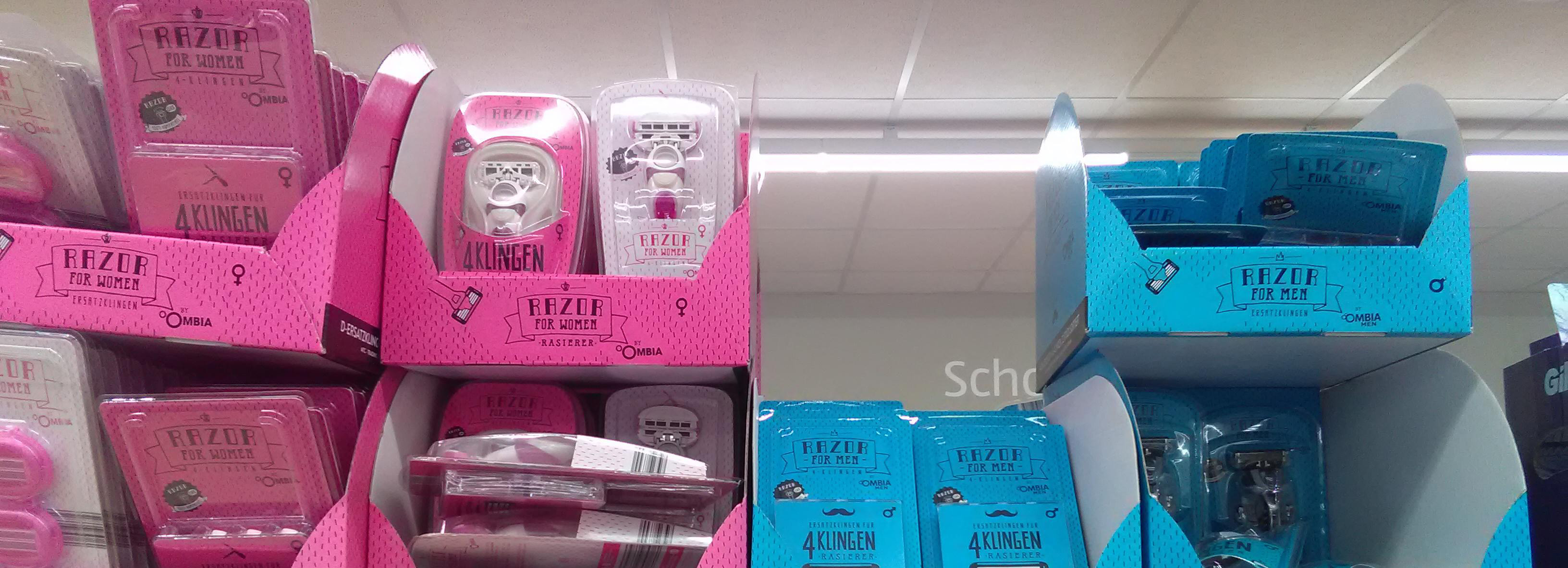
The "Pink Tax" is a globally recognized phenomenon where products marketed to women cost more than functionally identical products for men. In Pakistan’s rapidly growing e-commerce space, this invisible surcharge is often whispered about in online forums as a symbol of economic bias. Inspired by these discussions, I set out to quantify this burden using a custom dataset of over 6,000 product listings from Daraz, Metro, Al-Fatah, and Imtiaz.
The Initial Shock: Does the Tax Exist?
At first glance, the data seemed to confirm our fears. Using a Hedonic Regression1, a way of breaking a product’s price down into parts like size, brand, and category, my initial model showed that female products were priced 5.30% higher on average.
When I applied Inverse Probability Weighting (IPW)2, a statistical tool that balances two groups to make them more comparable, the "tax" jumped to a significant 8.38%. If I had stopped there, the headline would have been simple: women in Pakistan are being overcharged.
The Hidden Mechanics: Compelled Consumption
If companies aren't systematically discriminating in their pricing formulas, why does shopping still feel more expensive for women? The answer lies in selection bias and social pressure. In my dataset, female consumers disproportionately selected premium-tier brands.
This isn't just a "choice"; it is a response to a society where women feel compelled to spend more on their appearance to remain "presentable" or "acceptable"3. Luxury brands often justify higher costs through more complex ingredient formulations, and specialized packaging designed to sell an "aesthetic" or "feeling" rather than just a function.
Furthermore, there is a stark difference in product utility and durability. Men's grooming products, such as razors, are frequently marketed based on durability and functional utility4. Conversely, because the patriarchy exerts constant pressure on women to maintain a hairless, polished appearance, the demand for female products is "inelastic"; meaning women will continue to buy them even if they are less durable or functionally "faulty." A man’s razor might last longer simply because his grooming habits aren't dictated by the same relentless social surveillance5.
The Total Cost of Being a Woman
Beyond the price tag of a single shampoo, we must consider the cumulative economic burden. The overall cost of being a woman is significantly higher when you factor in biological essential (including period products such as pads, tampons, cups etc.); social expectations, like skin care, makeup, jewellery etc); and the grooming gap which includes perfumes, hair removal, and specific types of clothing/lingerie. When you add these layers together, even if a single bottle of lotion costs the same for both genders within a brand, the total basket for a woman remains vastly more expensive.
The Plot Twist: Apples to Apples
To isolate whether the "tax" was a pricing policy, I used the Within-Brand Fixed Effects6. This compares, for example, Nivea Men to Nivea Women. In this controlled view, the price difference dropped to -3.28%. This suggests that while the market is more expensive for women due to the variety of products they are pressured to buy, individual brands are generally pricing their male and female lines similarly.
Unmasking the Limits: Where Discrimination Still Hides
It is vital to recognize that this study is a snapshot of a single moment in time (October 2025). Causal inference requires strict "apples-to-apples" comparisons, which created a significant data hurdle: to conclusively prove or disprove a Pink Tax, a male-targeted product and its female equivalent must be available at the same retailer simultaneously.
When these direct binary equivalents were unavailable in the same store, the analysis became significantly more complex. Without an equivalent product for every listing, we cannot definitively say the tax is absent across the entire market. Discrimination in retail is often structural and subtle; it may hide in the very fact that female equivalents are sometimes excluded from budget-friendly platforms, or that certain categories are fundamentally gender-segregated, making a fair comparison impossible. While our brand-level data suggests pricing parity, the broader market landscape still presents a significant economic disadvantage for women.


Taqwaa Binte Fayyaz is a Computer Scientist and HCI enthusiast currently navigating an exchange semester in Malaysia. My hobbies include writing, researching and reading. My strongest quality is being imaginative, creative and curious with a passion for the intersection of the fields of psychology, gender and human computer interaction.
1 Hedonic Regression: A price decomposition method in which a product's observed price is regressed on its measurable characteristics (e.g., size, brand tier, category) to isolate the contribution of each attribute to price. See Rosen (1974) and Lancaster (1966).
2 Inverse Probability Weighting (IPW): A causal inference technique that reweights observations by the inverse of the probability of their group assignment, creating a pseudo-population in which confounders are balanced across comparison groups. See Rosenbaum & Rubin (1983).
3 Lafferty, 2019; Wishart et al., 2024; LSE Human Rights Blog, 2022.
4 Lafferty, 2019; Wishart et al., 2024
5 Wang, 2025 ; Wishart et al., 2024
6 Within-Brand Fixed Effects: A panel data estimator that eliminates brand-level unobserved heterogeneity by comparing male and female products only within the same brand, removing all time-invariant brand characteristics from the estimation. See Wooldridge (2010, 2012).